Work / Oceans, Reefs & Aquariums
Aquaculture Magazine
Editorial design
Designing 30 years of marine aquaculture into a premium 43-page B2B editorial publication.
Overview & challenge
ORA needed a publication that could do more than inform — it needed to inspire confidence. The challenge was to bring together corporate storytelling, scientific expertise, product education and global operations into one cohesive editorial experience.
The result is a 43-page magazine that communicates ORA’s leadership in marine aquaculture while celebrating three decades of purpose, innovation and quality.
01 — Selected spreads
Six from forty-three
About ORA
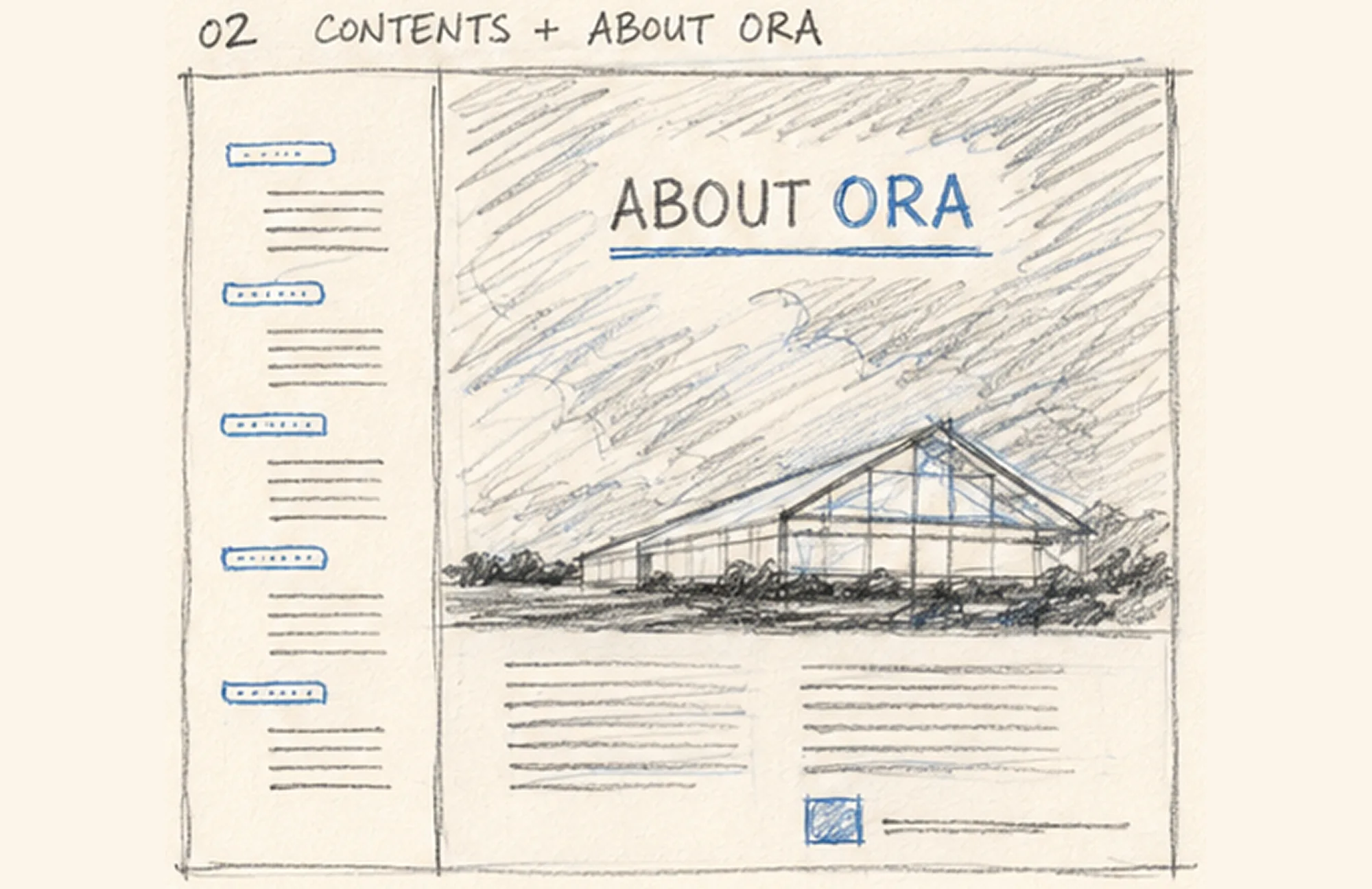
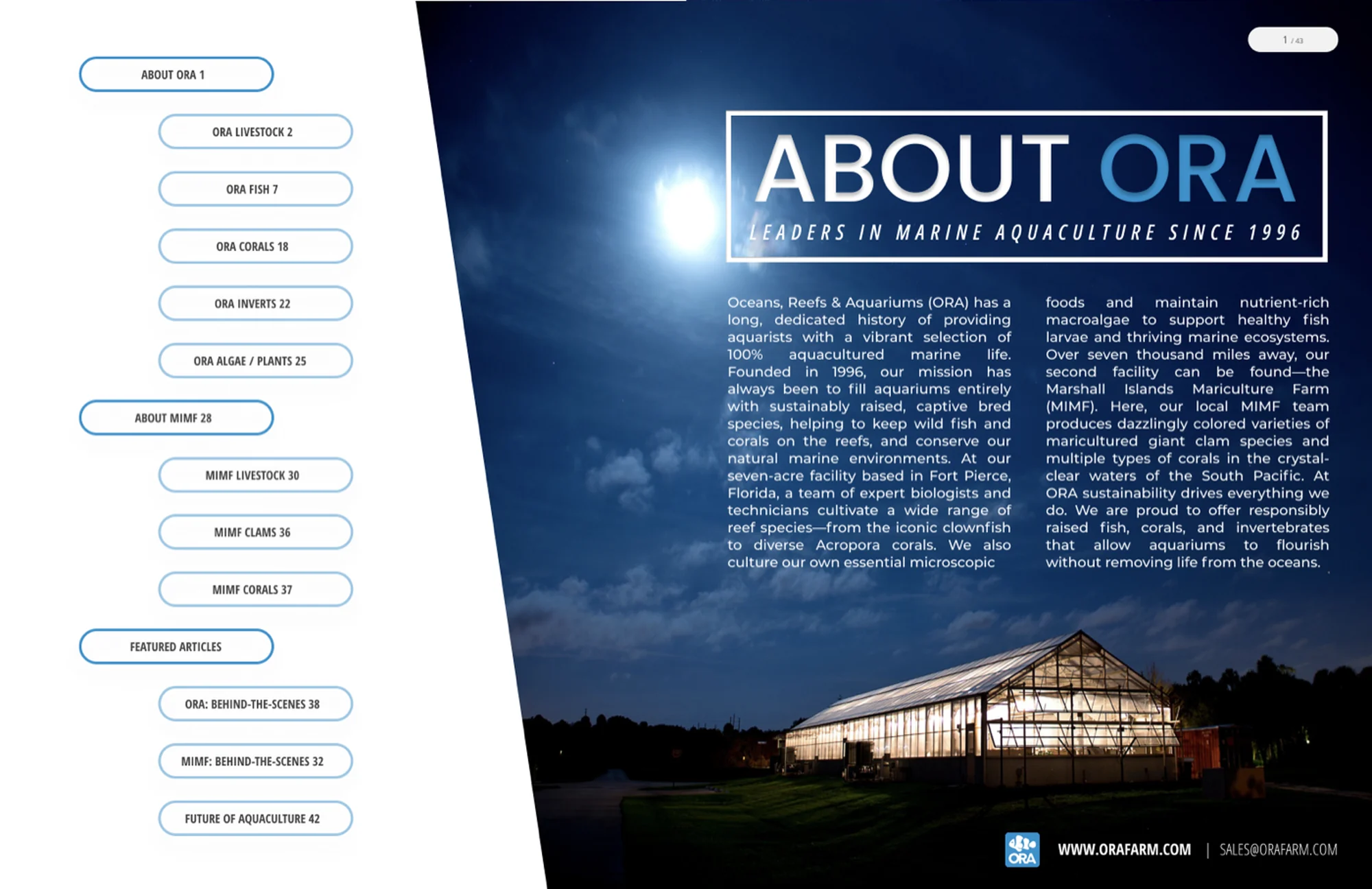
The opening spread carries the contents on the left and the mission on the right — a night shot of the Fort Pierce greenhouse under the line Leaders In Marine Aquaculture Since 1996.
Pages 1–2 · overview + mission
ORA Clownfish
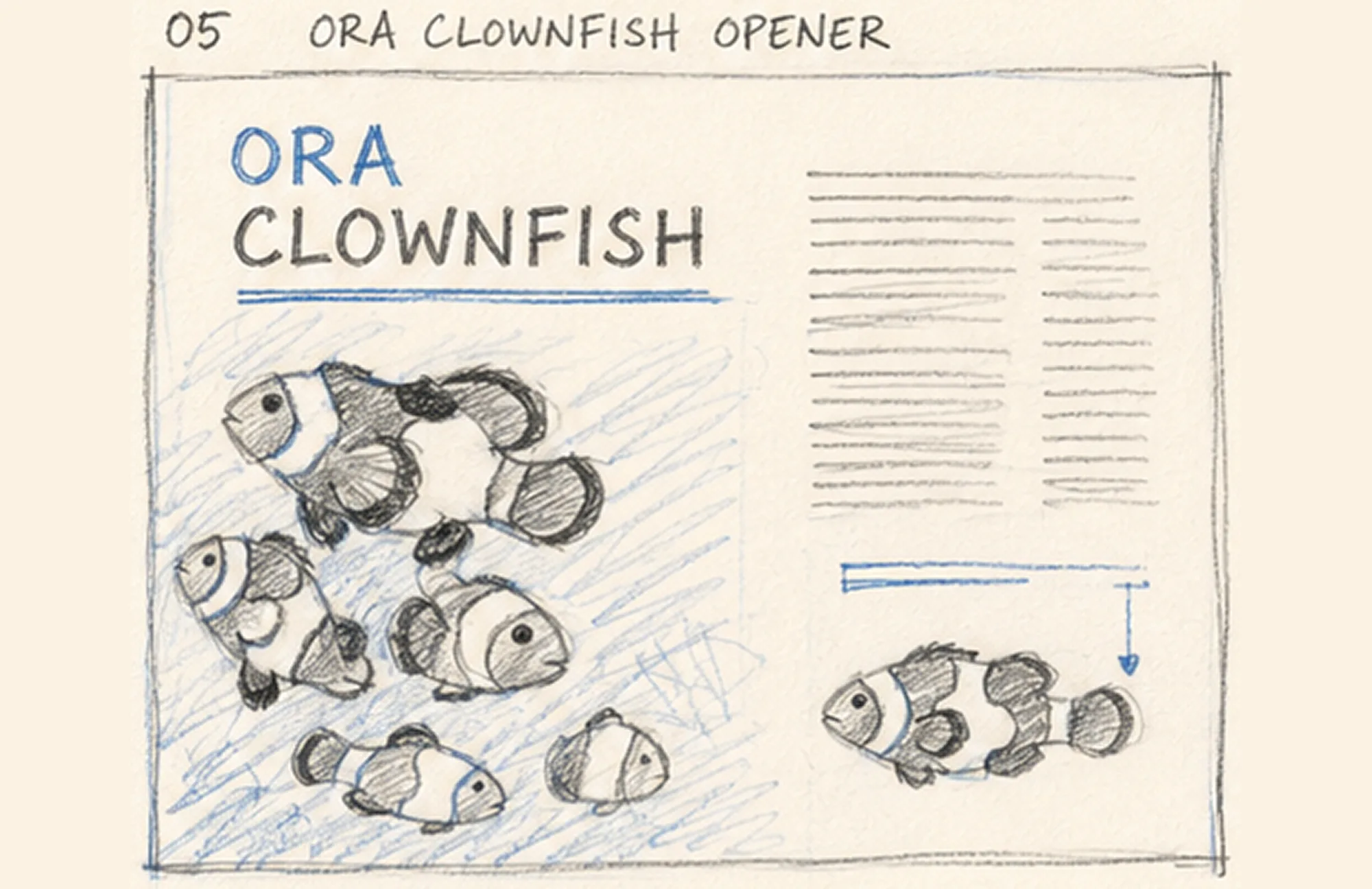
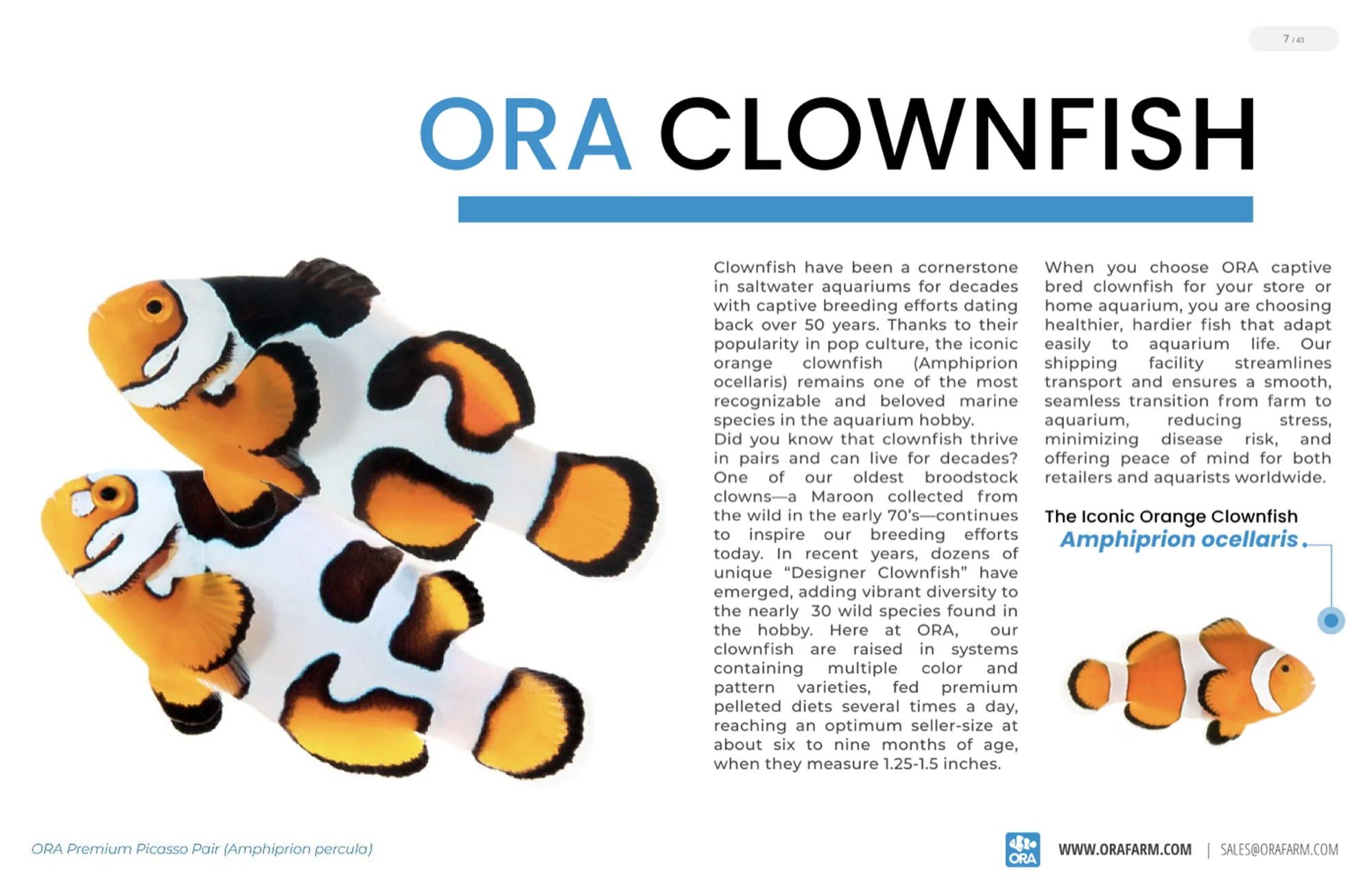
A species story built to educate as much as sell — breeding history, care, and a diagram naming the iconic orange clownfish, Amphiprion ocellaris.
Page 7 · species story with education + care
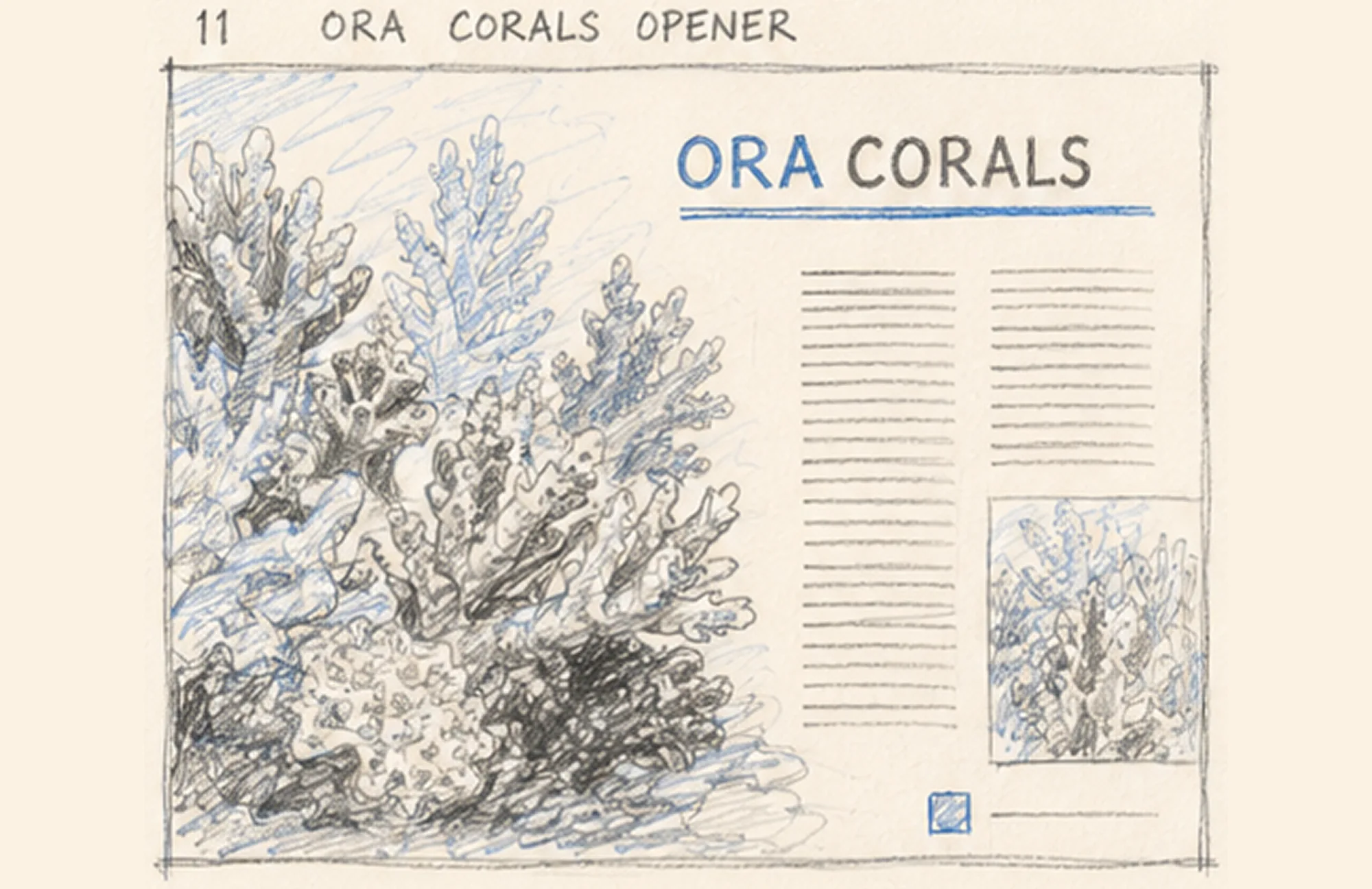
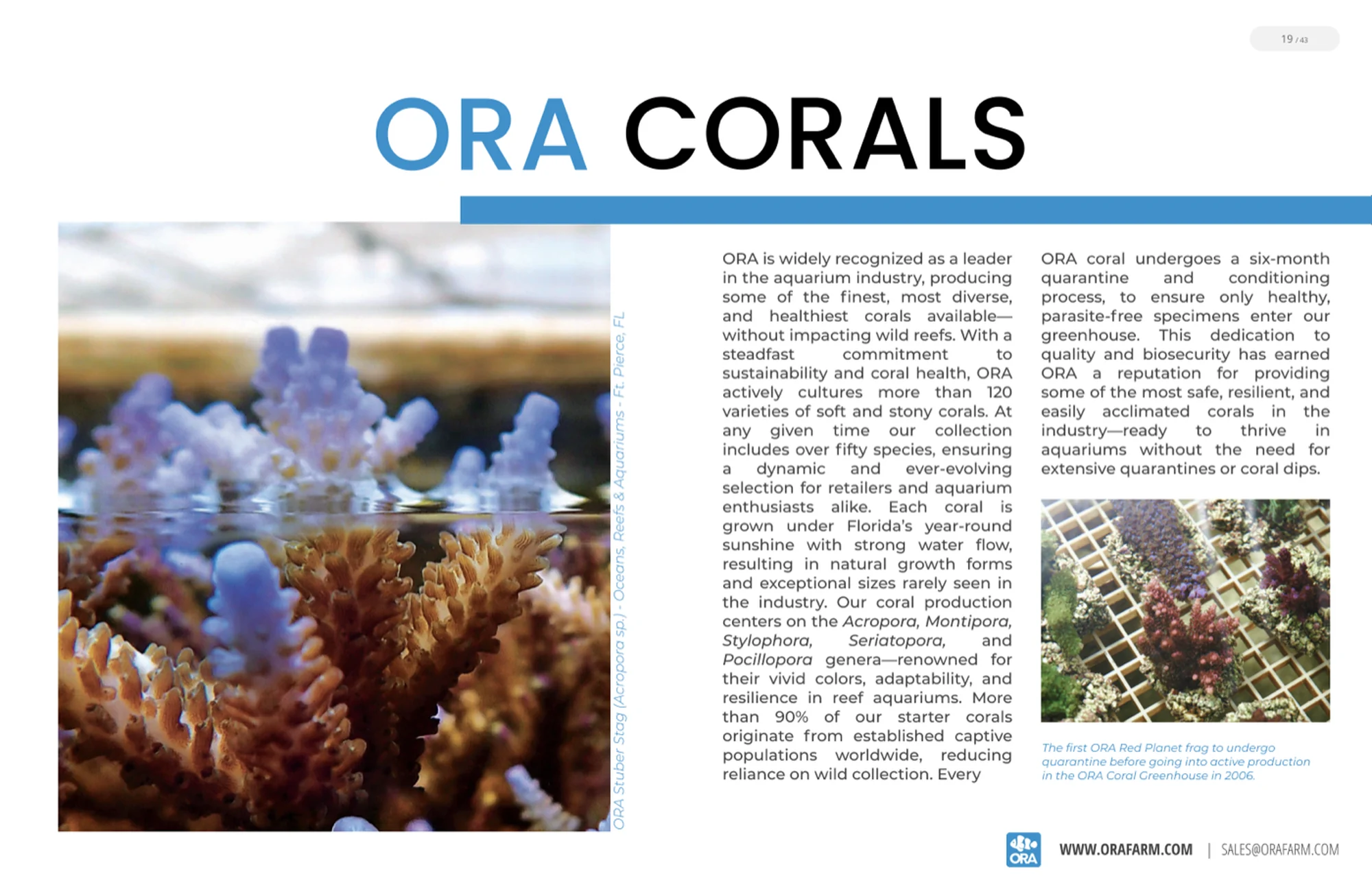
ORA Corals
Expertise, biosecurity and coral innovation — including the six-month quarantine that lets ORA corals enter an aquarium without extensive dips.
Page 19 · expertise, biosecurity + coral innovation
The story of MIMF
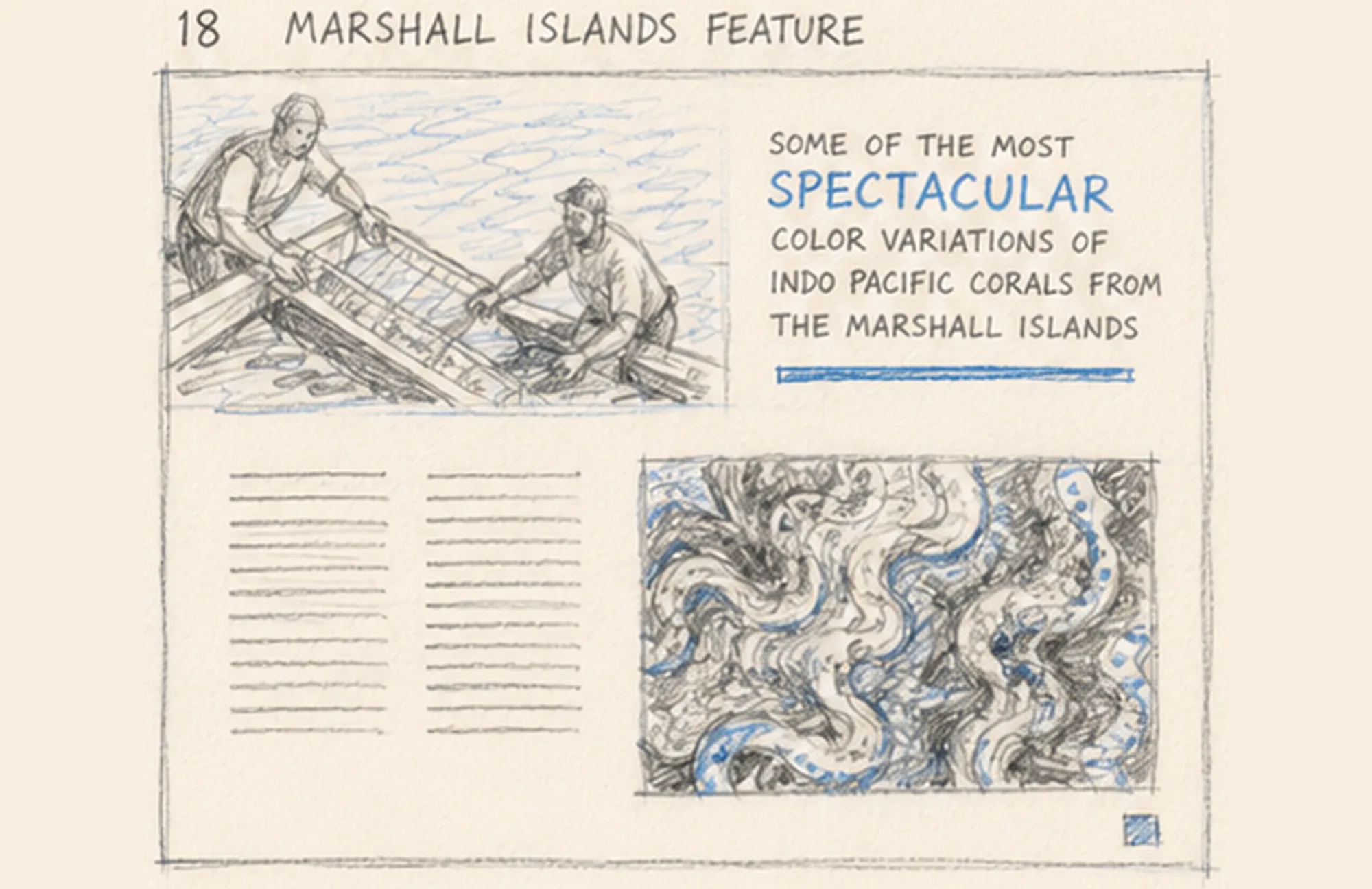
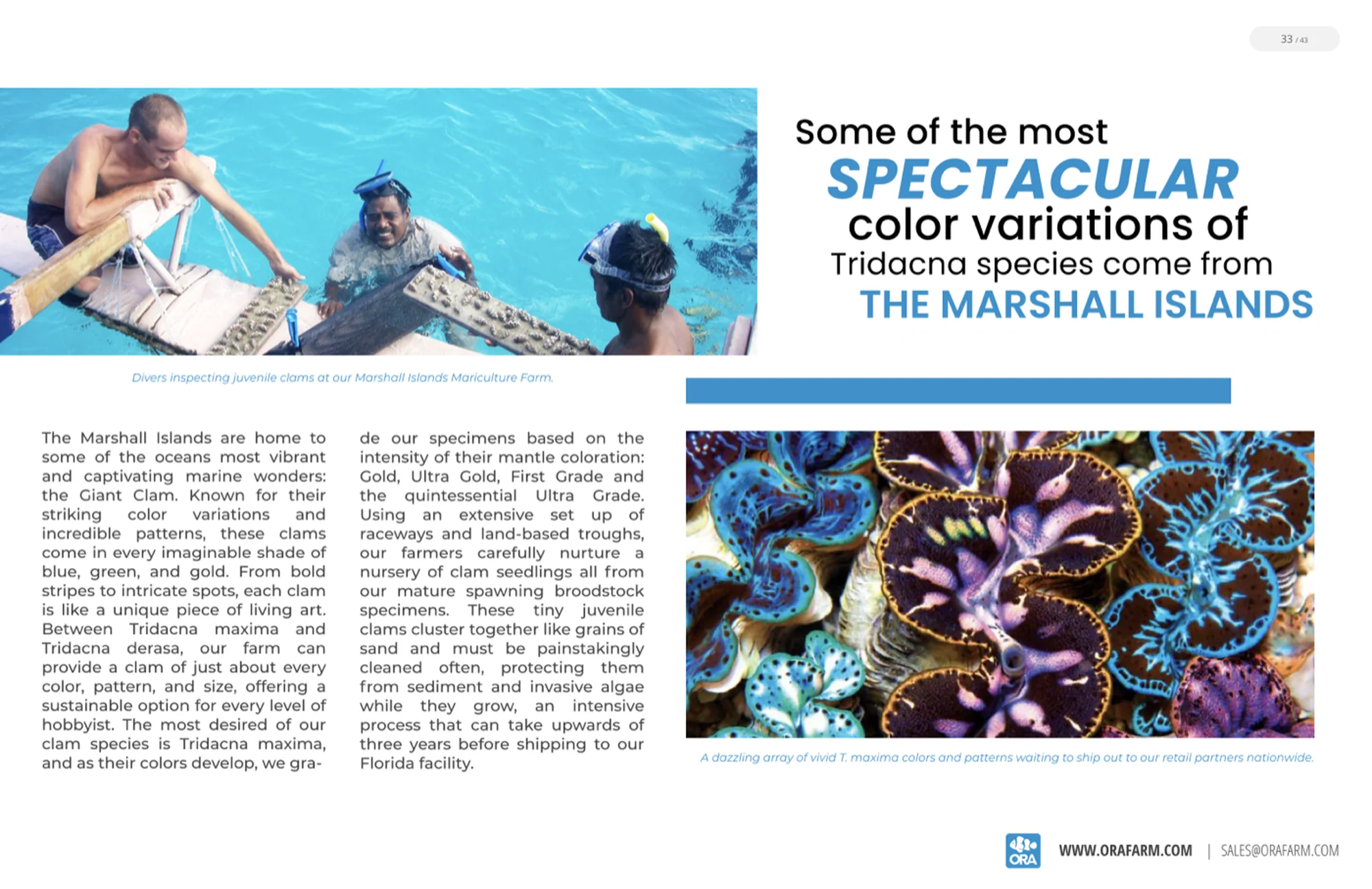
Seven thousand miles from Florida, the Marshall Islands Mariculture Farm raises giant clams graded by mantle color — Gold, Ultra Gold, First Grade and Ultra Grade.
Page 33 · global facilities + giant clam mariculture
ORA behind the scenes
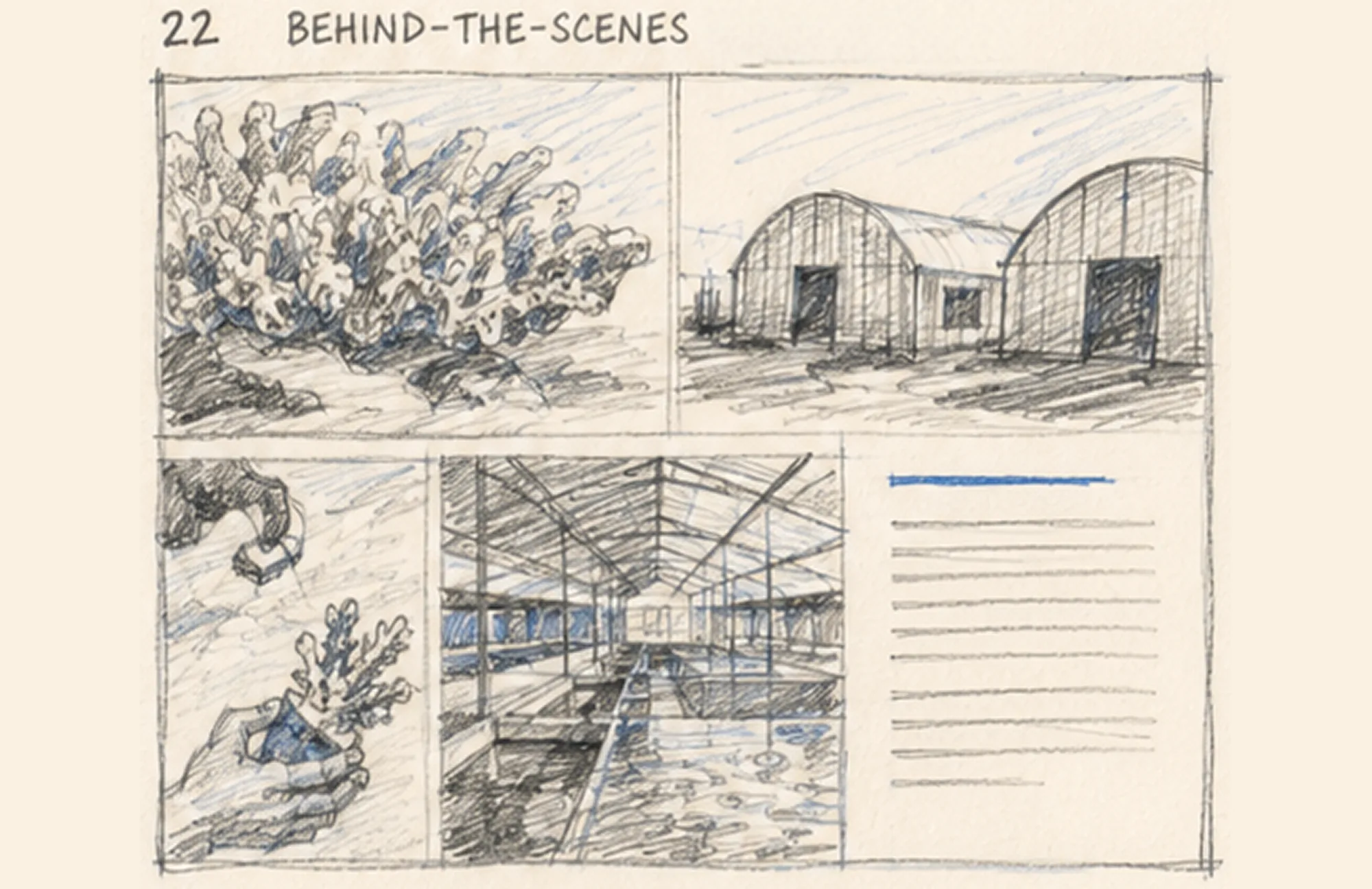
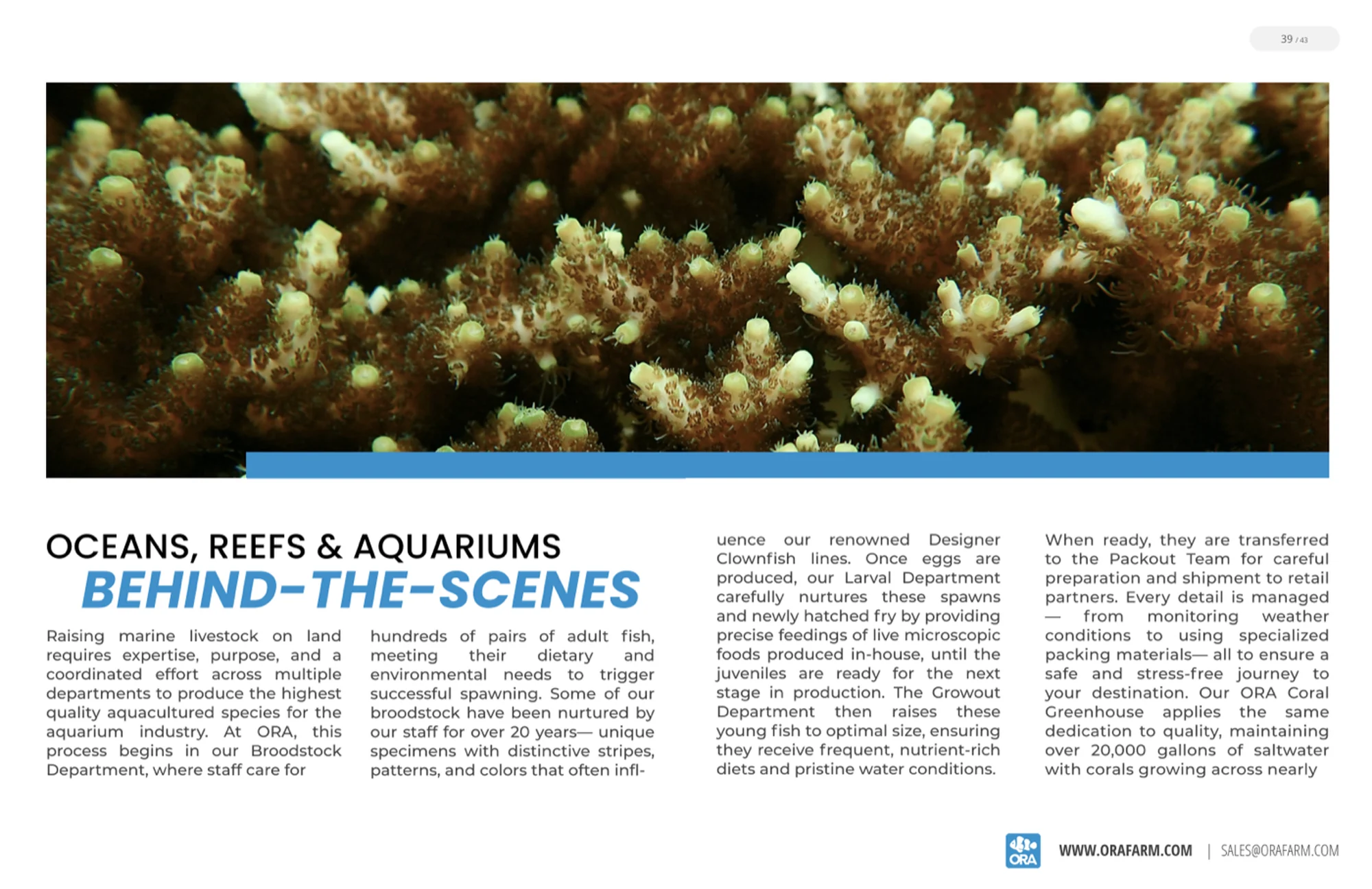
An all-access look at the operation, department by department — broodstock, larval, growout and packout, and a greenhouse holding over 20,000 gallons of saltwater.
Page 39 · a behind-the-scenes look at ORA operations
A look to the future
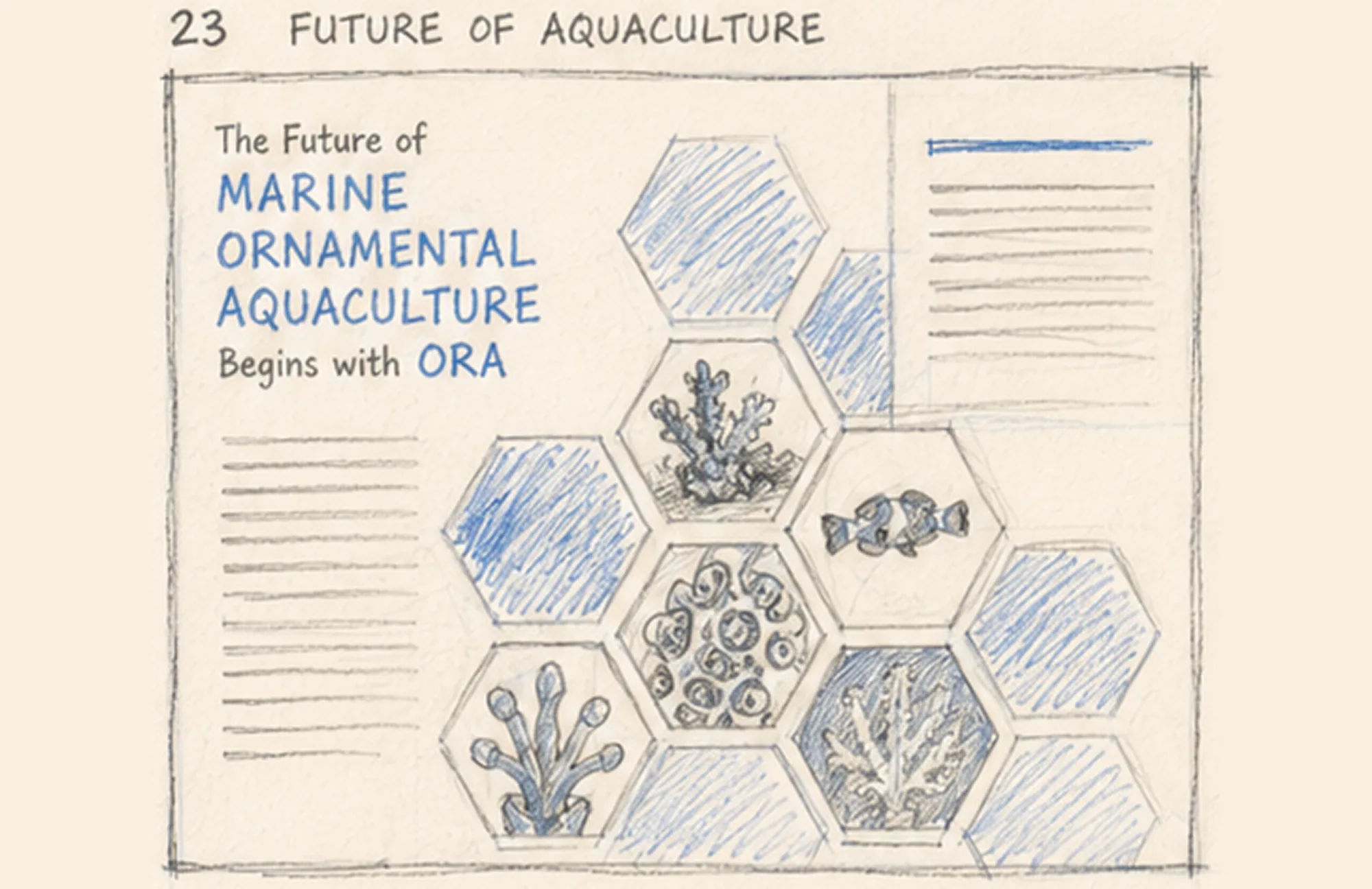
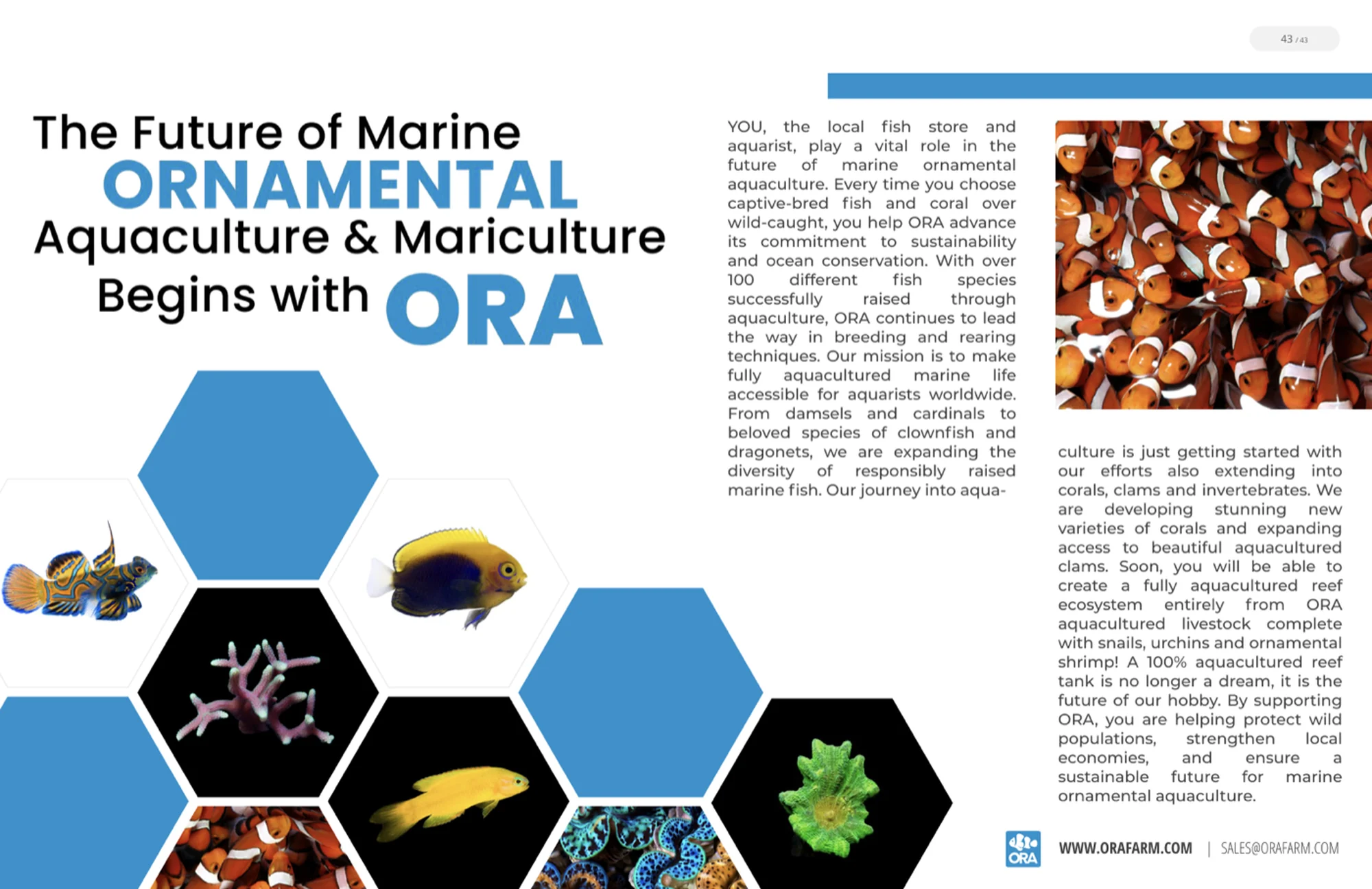
The closing feature: over 100 fish species raised through aquaculture, and the case that a fully aquacultured reef tank is no longer a dream.
Page 43 · the future of ORA aquaculture
02 — The design system
Inside the system
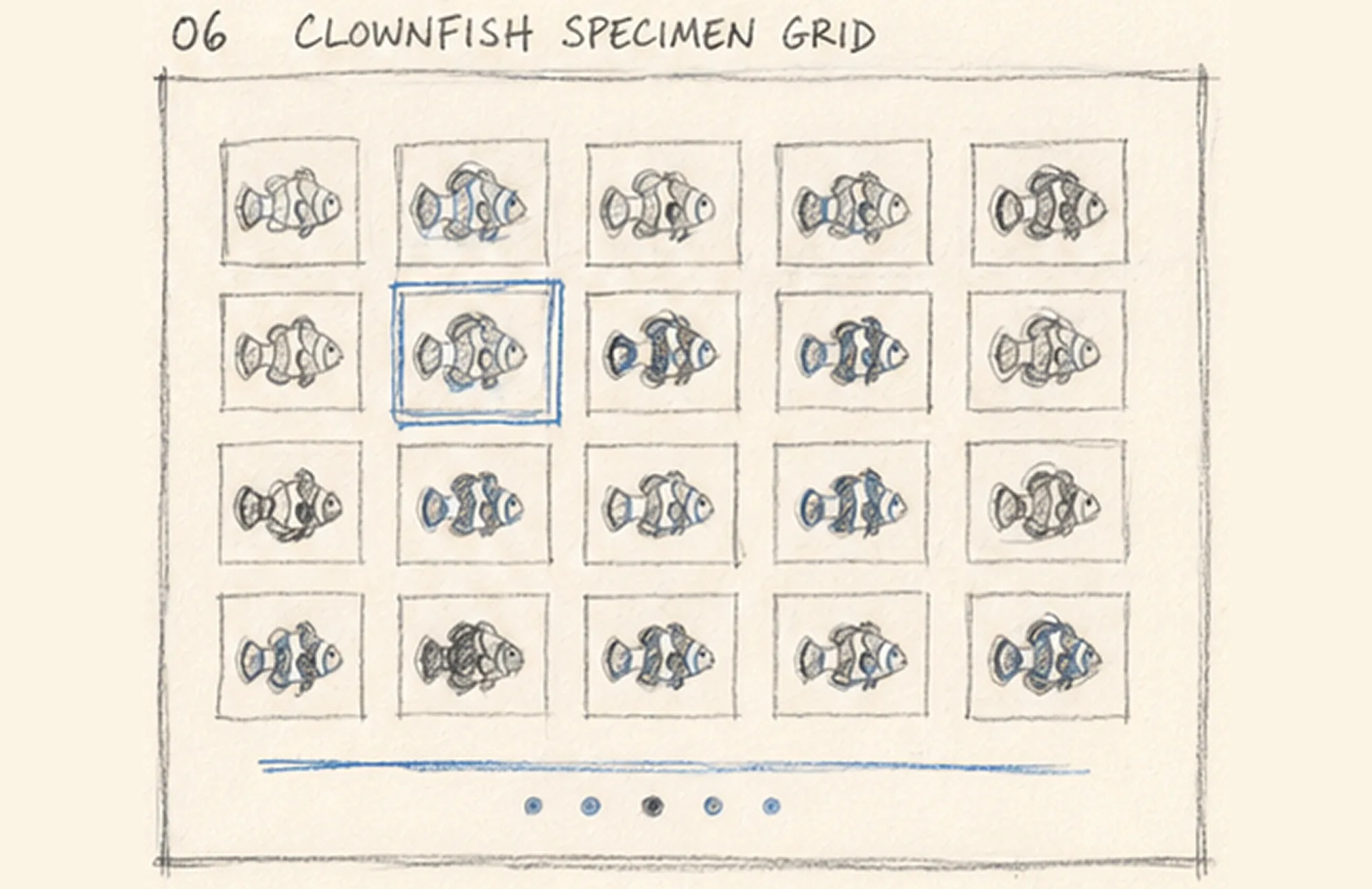
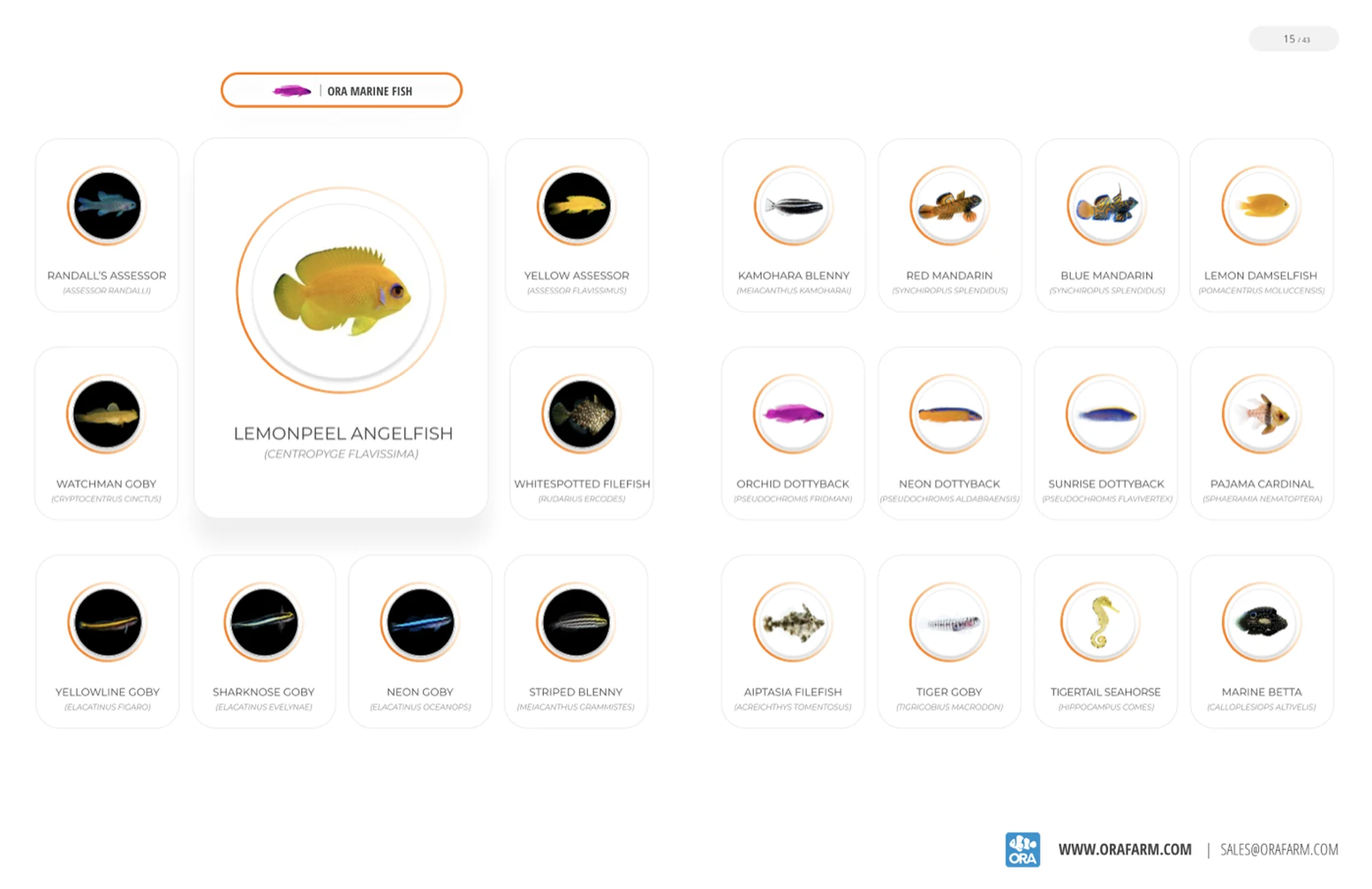
A modular grid and consistent visual language bring clarity and cohesion across species categories and product experiences.
- Clear hierarchy
- Strong typographic and color hierarchy for easy scanning.
- Repeatable product grid
- Modular layout for scalable species and product collections.
- Editorial pacing
- Alternating layouts and imagery to maintain engagement.
- Brand consistency
- Consistent use of ORA blue, iconography and visual language.
03 — Stakeholder feedback
Six revisions
The magazine went through six rounds of stakeholder review before landing on the final editorial product. Notes came back page by page — 36 of them across 18 pages — covering editorial cadence, layout, copy accuracy and image quality. Working through them is what turned a draft into a publication.
- Editorial cadence
- Book view didn’t work — a blank page was needed after the cover so the spreads paired correctly. Periods came off the chapter titles. Whole sections were reworked, and species split across a gutter were pulled onto one page.
- Layout & typography
- Category bubbles recolored across ORA and MIMF livestock. Genus and species italicized under every image, not some. A gap closed under the ocellaris photograph. Diet lists restructured. Captions applied consistently rather than to one image alone.
- Copy accuracy
- Seven-acre farm. Hundreds, not dozens. Fifty years. “Algae”, never “algaes”. “Dedicated” used twice in one opening paragraph. Misspellings caught on mccullochi and Premium Gladiator.
- Image quality
- The opening image was too low-resolution. The Stubby pair was blurry. Several catalog photographs came back out of focus and were reshot rather than run soft.
The takeaway
Complexity does not need to feel complicated.
Through intentional storytelling and a refined design system, the ORA Magazine brings together science, products, sustainability and global impact — crafted into a publication that informs, inspires and elevates the future of aquaculture.
The whole book
Cover to cover
Forty-three pages running from the contents through the livestock catalog — fish, corals, inverts, algae and plants — across to the Marshall Islands Mariculture Farm, and closing on the featured articles.